
- News
- Posted by: Amministrazione
The Journey of the Harvest
A Tale of a Millennia-Old Tradition Between Grapes, Humans and Culture
A Beginning Among the Vine Rows
When summer gives way to autumn, the air turns crisper and the countryside fills with an unmistakable scent: that of ripe grapes. It is the silent call of the harvest, an ancient ritual that, year after year, repeats itself in all its sacredness.
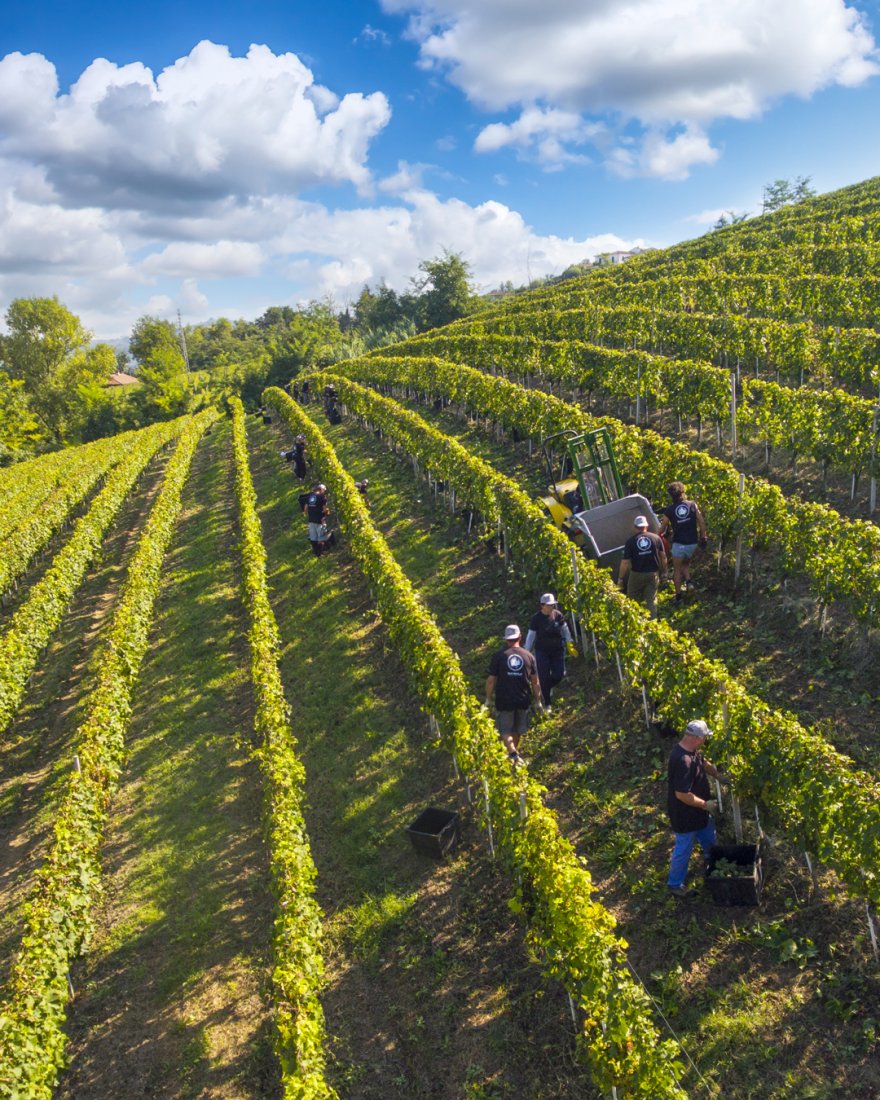
Picture a hillside at dawn, the sun filtering through light mist, and the hands of farmers—performing gestures passed down through generations—carefully picking each cluster.
The harvest is much more than agricultural labor: it is memory, identity; a gesture that binds the earth to culture and to humanity.

At the Roots of History: The Origins of the Harvest
The earliest evidence of winemaking dates back around 8,000 years, in the southern Caucasus region, where archaeologists found Georgian amphorae containing wine residue.
But it was the Egyptians, as early as 3000 BCE, who first documented organized harvests with temple engravings: grapes were crushed in vats and the juice fermented in jars.
The Greeks later gave vines and wine religious and social significance: Dionysus, god of wine, was honored with public festivals (the Dionysia) that included songs, theater, and, of course, abundant wine consumption. With Greek colonization of the Mediterranean, viticulture techniques spread to Sicily, Calabria, and Puglia.
The Romans, however, perfected large-scale wine production and trade. Writers like Pliny the Elder and Columella described viticultural practices in detail: vineyard exposure, harvest timing, cluster selection.
The harvest became a key moment in the Roman agricultural calendar, associated with festivals, religious rites, and family celebrations.

The Middle Ages: Guardians of Knowledge
With the fall of the Roman Empire and barbarian invasions, much agricultural knowledge was lost—but not all.
Christian monasteries became the keepers of vine cultivation and the harvest. Monks—especially Benedictines and Cistercians—not only continued to produce wine for liturgical use but refined cultivation techniques, selecting the best varieties, mapping ideal lands, and experimenting with pruning methods.
In many abbeys, the harvest calendar followed strict rules: the waning moon was considered the ideal time to harvest, vineyards were blessed, and Gregorian chants accompanied the labor.
In these centuries, the first geographic denominations were born: wines from Bordeaux, Reims, and Montepulciano began to stand out for their identity and value.

Renaissance and Modernity: Between Culture and Commerce
The Renaissance brought vines back into the gardens of noble villas. In Italy, the harvest became a social event, celebrated with festivals, banquets, and artistic representations.
Great artists—from Leonardo da Vinci to Caravaggio—referenced wine in their writings and works. At the same time, wine commerce became increasingly strategic. The harvest gained growing economic value, and techniques improved: foot-pressing gave way to wooden presses, fermentation was studied and controlled.
In the 1700s, the figure of the “professional viticulturist” emerged, and many noble families began investing in vineyards, laying the foundation for modern wineries.
Tradition and Innovation: The Harvest Today
Today, the harvest is an art suspended between tradition and technology. In small family-run vineyards, manual harvesting is still practiced: expert hands select only the best clusters, respecting nature’s rhythms.
Elsewhere—especially on large estates—mechanical harvesters are used, along with drones for monitoring ripeness and digital sensors for analyzing acidity and sugar content. And yet, despite the innovation, the heart of the harvest remains deeply human. It’s a time when families come together, stories are passed down, and songs echo through the fields.
In Italy, every region has its ritual: in Barolo, Piedmont, the first grapes are offered to the Madonna; in Sicily, people dance with the new wine during harvest festivals; in Tuscany, “bruschetta with must” and folk songs are the symbols of celebration.

Curiosities, Legends, and Anecdotes
-
The Silent Harvest: In some Trentino communities, it was believed that one should not speak during the harvest, out of respect for the land that was “giving”.
-
The Blessed Must: In Puglia, some families still bring the first must to church to be blessed by the priest.
-
Moon Grapes: Sardinian tales say that grapes harvested under the full moon produce wine that “sings in the barrel”—a poetic way to say it ferments well.
A Ritual That Withstands Time
In the end, the harvest is one of the few practices that modern humans perform with the same passion as their ancestors. It is a moment of giving back: after months of pruning, waiting, rain, and sun, the vine gives back its fruit. A fruit that is not just substance—but liquid memory of an entire year, a territory, a culture.
Every sip of wine tells a story. The story of a grandfather teaching his grandchild to judge a good grape by the light it reflects; of an old farmer who knows “by nose” when it’s the right time; of a young woman who returns to her village just once a year, to harvest with her family.
The Present That Tastes of the Past
In today’s fast and globalized world, the harvest remains a slow and sacred time. It is the gesture by which humans bow to the earth, listen to it, and give thanks. It proves that—even in the age of advanced technology—what truly matters has deep roots. The harvest is not just the prelude to wine: it is a celebration, a craft, a legacy.
It is the thread that ties agriculture to the soul—and as long as there are those who are moved by a vineyard full of grapes, who want to tell and hear these stories, the harvest will continue to be not just a seasonal ritual, but one of the truest expressions of what it means to be human.
>> Discover all the wines of Duchessa Lia


